| G l o b a l R a i n f o r e s t s |
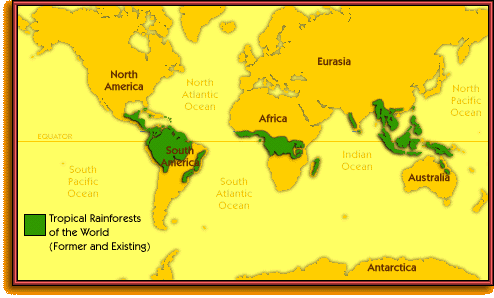 |
| Rainforests cover about 8.5 million square kilometers (about 3.3 million square miles) of Earth’s land surface, about 6% of the planet’s dry land. (At least, it would be dry if we weren’t speaking about RAINforests!) According to “The Last Rainforests,” edited by Mark Collins, this is only about half the amount of rainforest which existed a few millennia ago. Then, the rainforest belt, watered by tropical precipitation and powered by planetary circulation patterns, covered 5 billion acres, about 14% of Earth’s land surface. 57% of today’s remaining rainforests can be found in South America (where Brazil alone is home to one third of all the planet’s remaining rainforest), 25% in Southeast Asia, and 18% in West Africa. The U.N.’s Food and Agriculture Organization estimates that about 71,000 square kilometers (27,000 square miles) is being lost each year, though some estimates are much higher. Rates of deforestation are linked to economic boom and bust cycles, and are also responsive to national policy choices emphasizing development or conservation, or what, since the Rio Earth Summit (1992) has been called “sustainable development”—an attempt to achieve economic growth without excessive environmental destruction. (See Activity Z.4 in the LFRF Teacher’s Guide for related facts, references and points of discussion.) |
